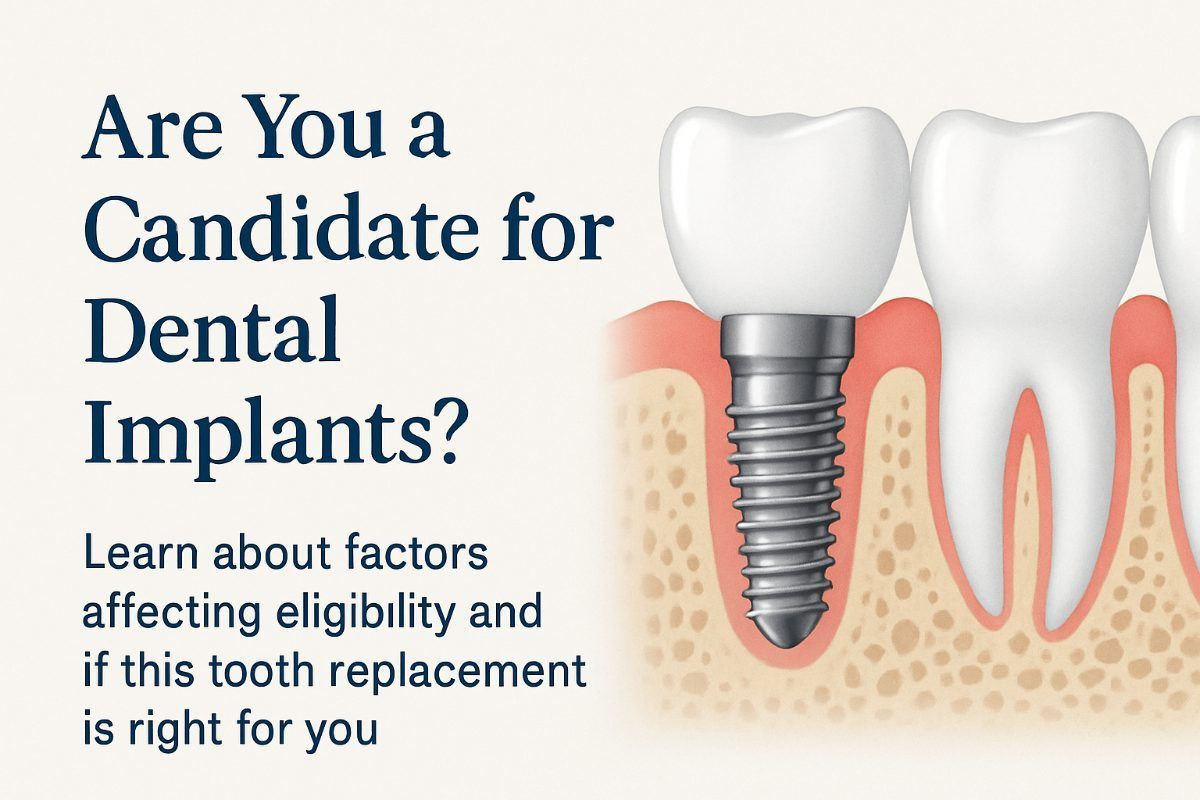
This post will help you decide if you are a
candidate for dental implants. Read on to learn the main factors doctors look for and the steps to get a clear, personalized answer.
Who is considered a candidate for dental implants?
- Missing one or more teeth
- Healthy gums or treatable gum disease
- Adequate jaw bone or willing to have bone grafting
- Good oral hygiene habits
- Non-smoker or willing to quit
- Realistic expectations about outcomes and timeline
Key medical and dental factors that determine candidacy
Oral health and bone support
Strong jaw bone and healthy gums are the foundation for implant success. Years of tooth loss or severe gum disease can cause bone loss. When bone is low, your dentist may recommend bone grafting or a sinus lift to rebuild support before placing implants.
Systemic health and medications
Overall health affects healing. Conditions like uncontrolled diabetes, certain immune disorders, or recent cancer treatments can increase risk. Some medicines — blood thinners or bisphosphonates used for bone disease — also change the plan. Your dentist or surgeon must review your full medical history to determine safety and timing.
Lifestyle and habits
Smoking reduces healing and raises the chance of implant failure. Heavy teeth grinding (bruxism) can damage implants over time. Good daily oral care and regular dental visits improve long-term success, and quitting smoking or wearing a nightguard can be part of the treatment plan.
How to find out: the evaluation and next steps
To confirm if you’re a
candidate for dental implants, expect a step-by-step evaluation:
- Clinical exam of teeth and gums
- X-rays and often a 3D CBCT scan to check bone volume and nerve locations
- Discussion of options: single implant, fixed bridge, or implant-supported denture
- Timeline and costs, including any preparatory care like extractions, grafting, or gum treatment
After the exam, your dentist or a specialist will give a personalized plan. That plan will explain whether implants are a good choice now or after specific preparatory steps.
Ready for a clear answer?Schedule a consultation to get a full evaluation and a step-by-step treatment plan so you know whether you are a candidate for dental implants and what to expect next.